Welcome to the Computational Electromagnetics Laboratory at McGill University.
We are proud to be the first research lab in computational electromagnetics in Canada.
Currently, there are five core faculties in our group.
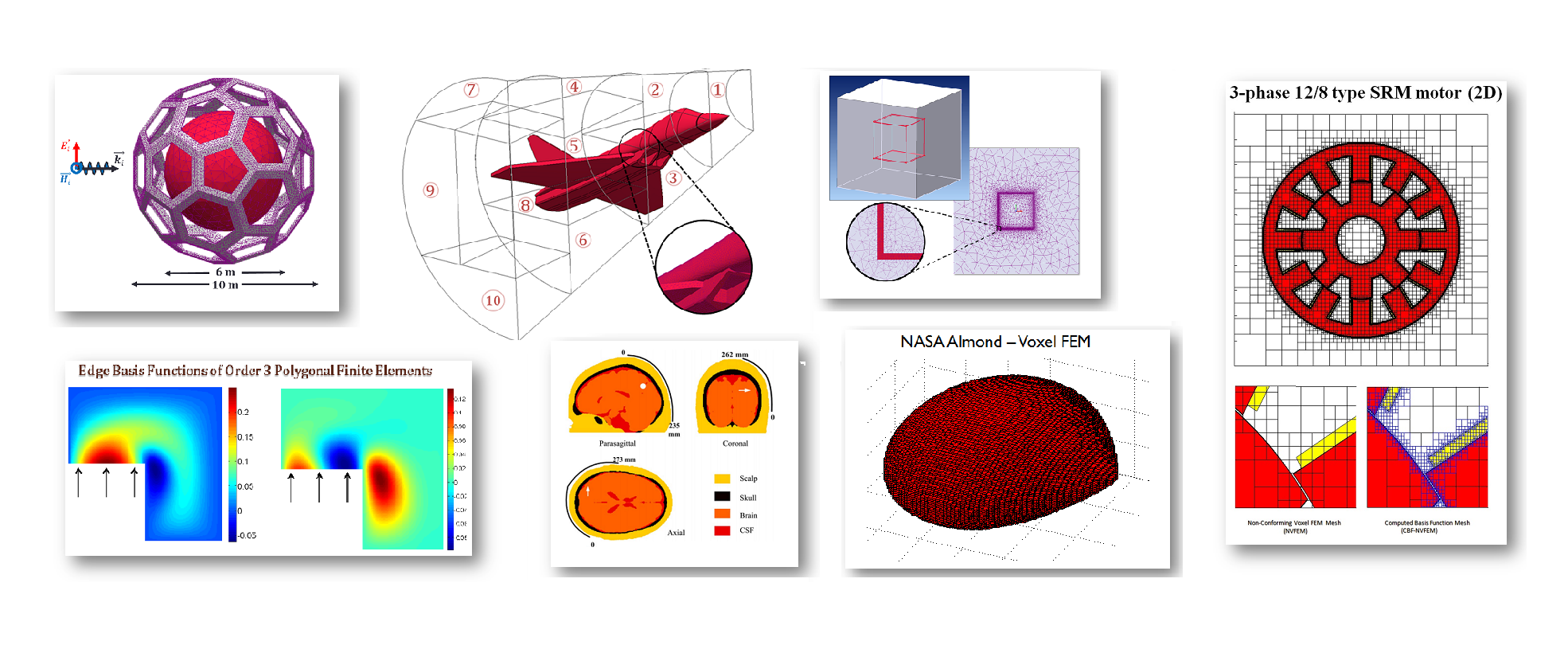
We are conducting research in the core algorithms of computational electromagnetics, such as adaptive mesh refinement and
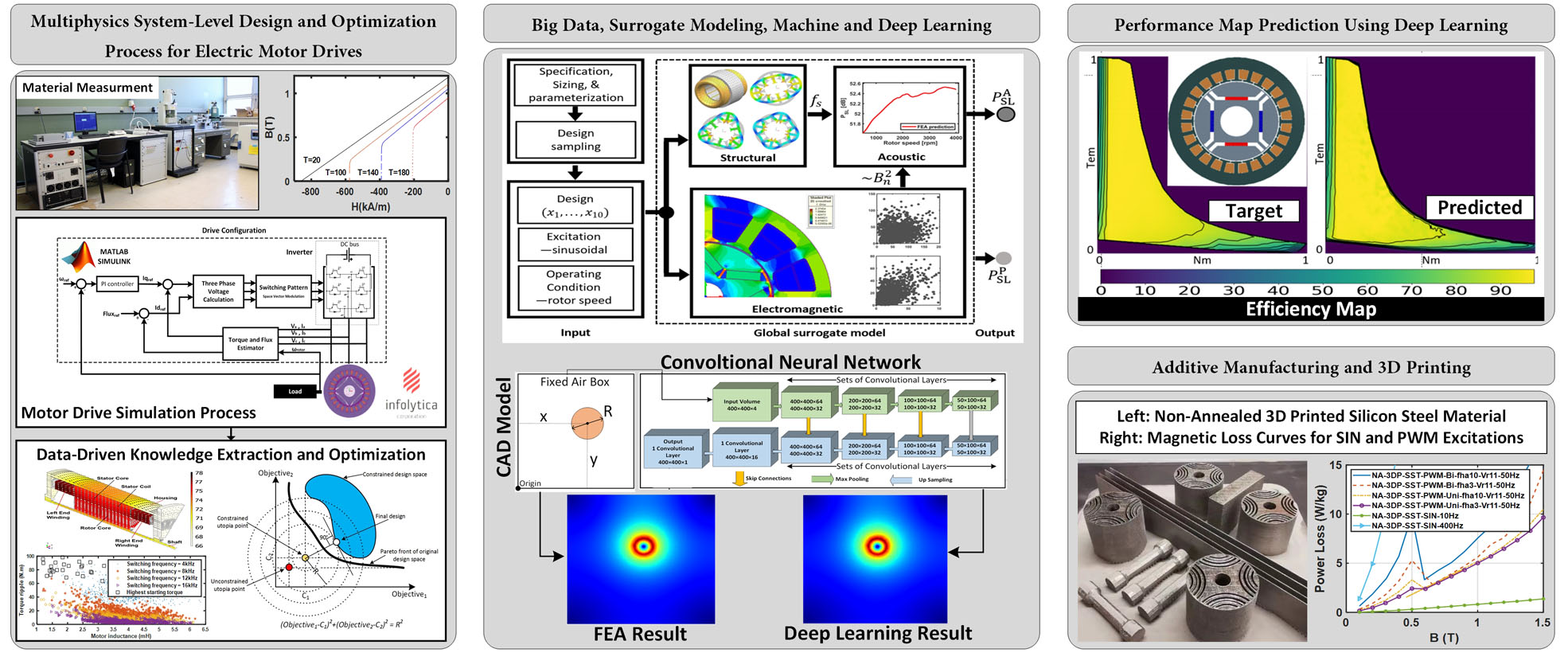
hierachical basis functions. We are also applying these algorithms in the applications like: design of low-frequency induction motor,
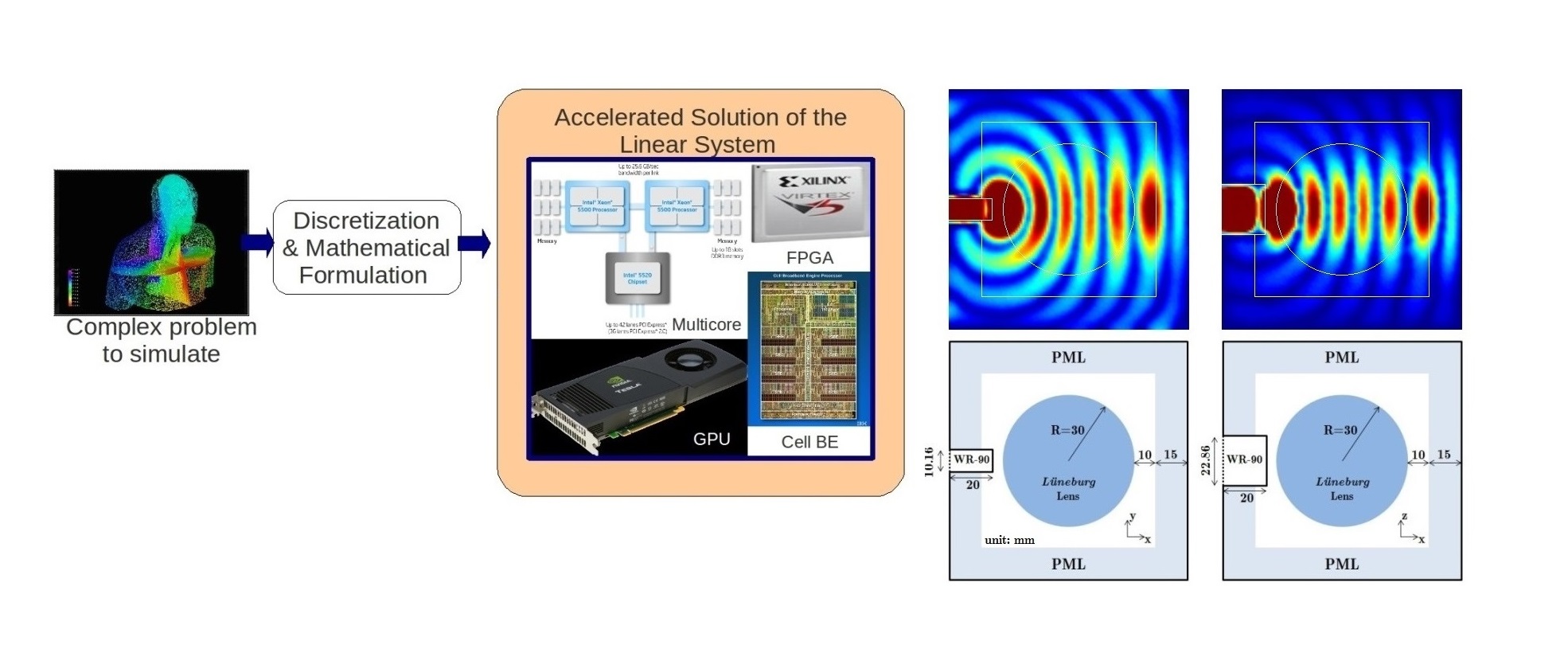
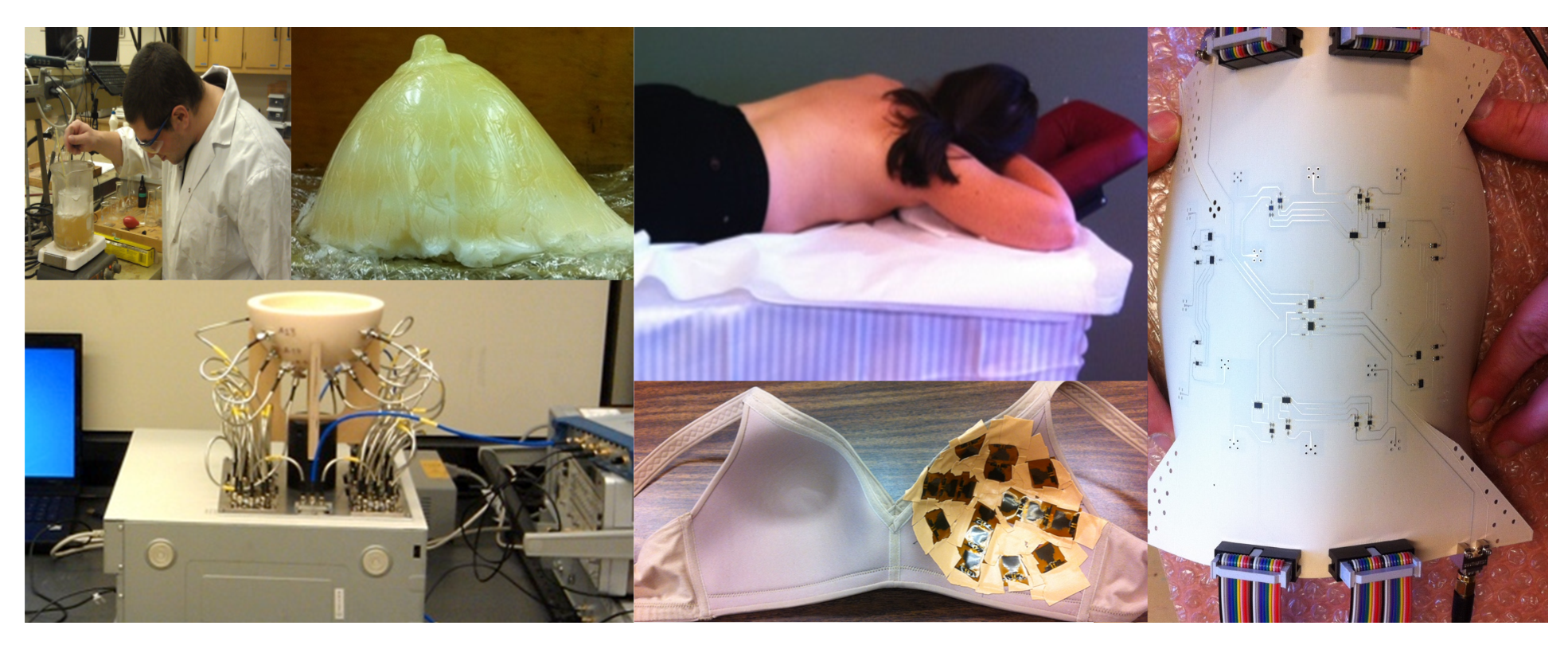
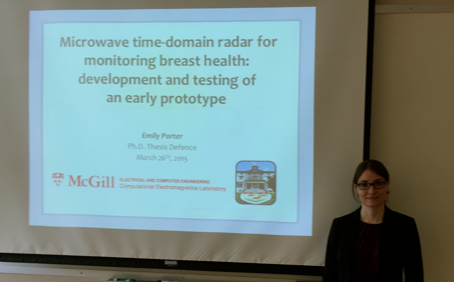
brain MRI, microwave-based breast imaging, GPU-based fast linear solvers.
We are publishing in IEEE Transactions on Magnetics, IEEE Transactions on Antennas and Propagation,
Computer Physics Communications, Numerical Methods in Engineering, etc. We are avid participants of
CompuMag and CEFC conferences.
Thank you for your attention. Happy browsing.
CompEM Group
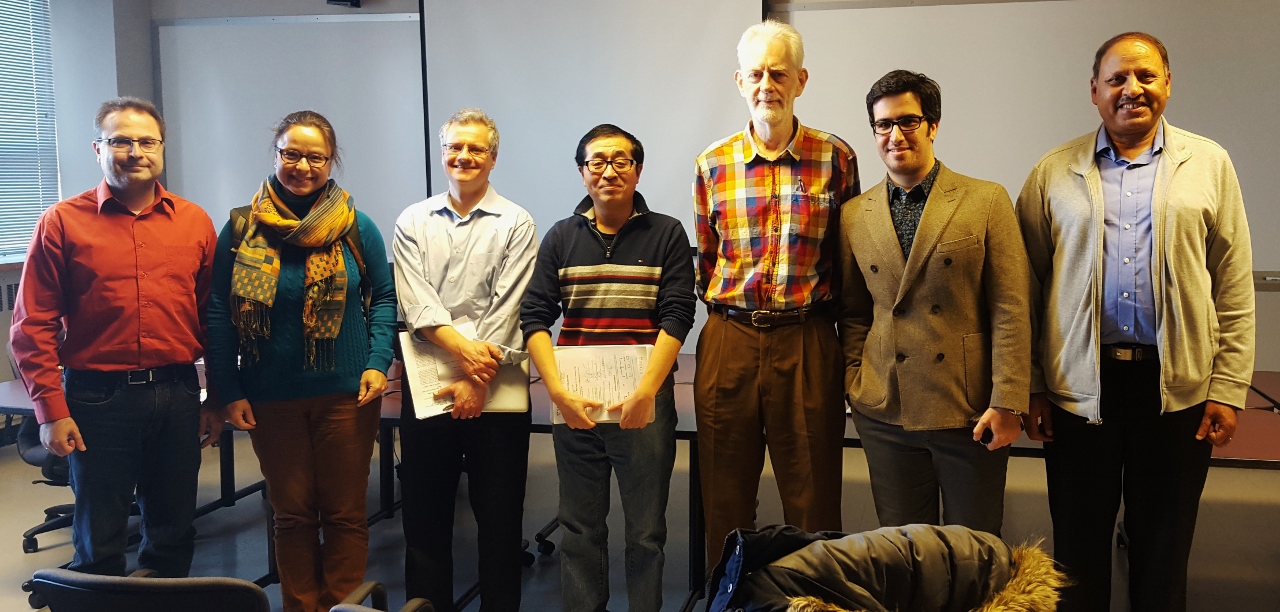
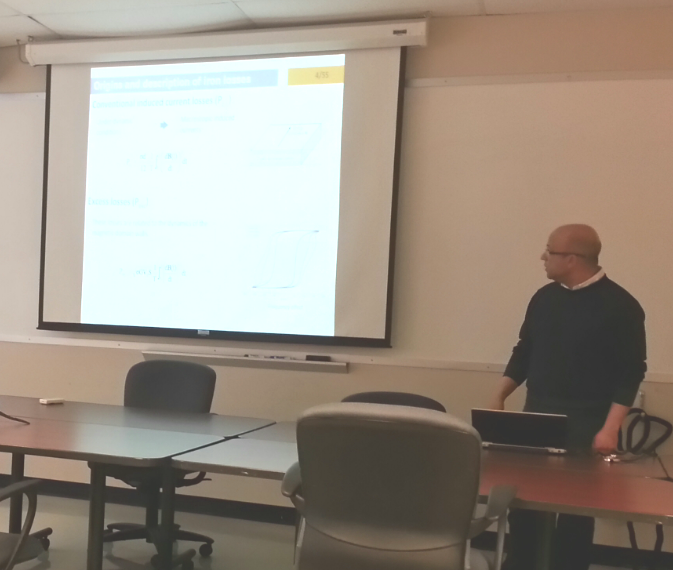
- Prof. Jin-Fa Lee from the Ohio State University gave a seminar on "Surface Integral Equation Methods for Electrodynamics" at Room 603, McConnell Engineering Building on June 20, 2012.

(From left: Prof. David A Lowther (McGill), Prof. Zoltan Cendes (CMU), Prof. Jin-Fa Lee (OSU), Prof. Jonathan Webb (McGill), Mr. Forghani.)
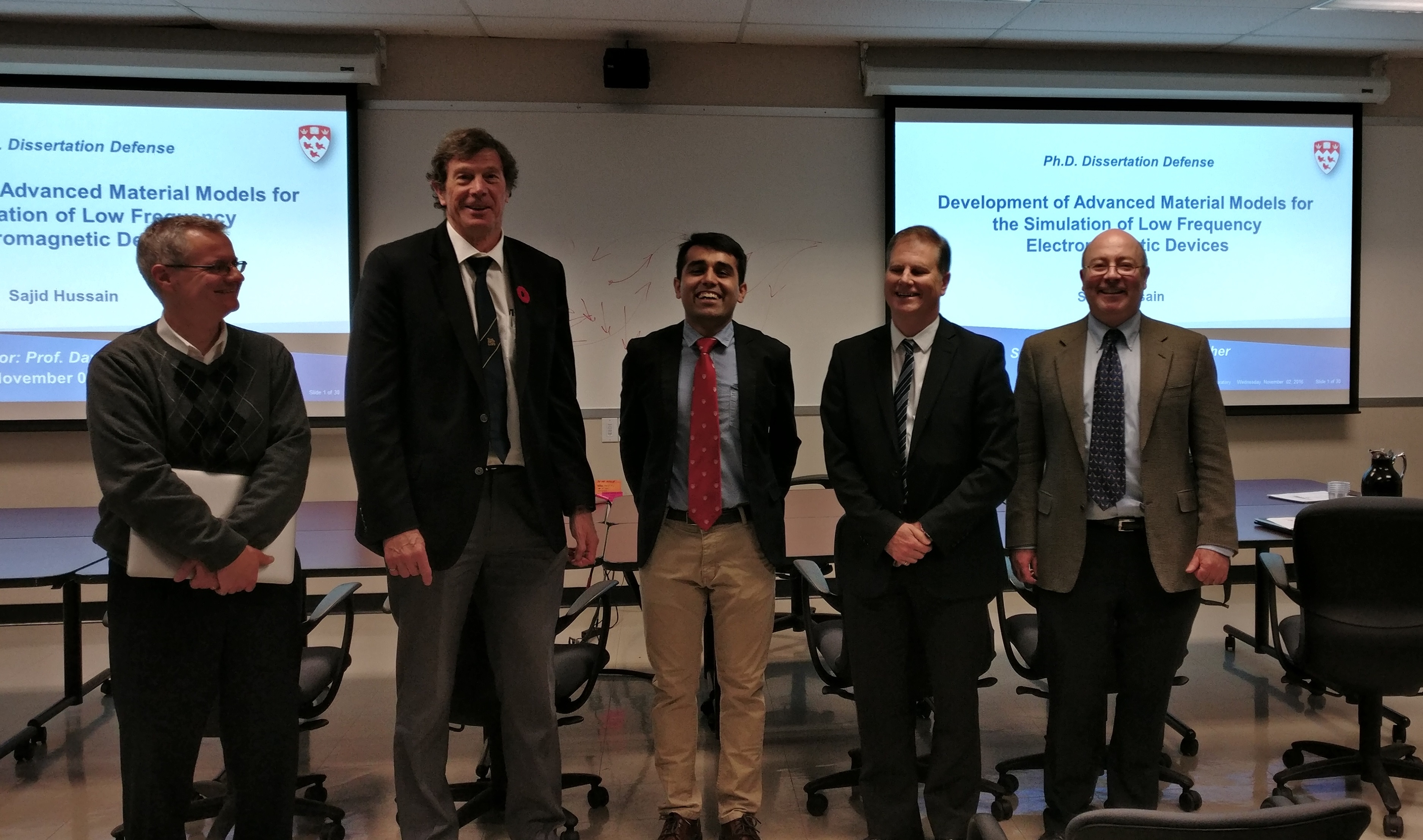
- Congratulations to Dr. Jun Ouyang who has successfully defended his Dissertation
entitled "Case-based Reasoning for the Creative Design of Electromagnetic Devices" under the direction of Professor David Lowther. (Feb. 22, 2012)
- Prof David Lowther presented his paper titled "Review of Optimisation techniques and strategies
for CEM" at the Eighth International Conference on Computation in Electromagnetics
from Wroclaw, Poland, April 2011. >> Play webcast
- Congratulations to Dr. Guangran Kevin Zhu who has successfully defended his Dissertation
entitled "Application of Microwave Techniques in Breast Imaging" under the direction of Professor Milica Popovich, 2011.
About the animation The animation
shows a plane wave hitting upon 6 dielectric cylinders that
spells out COMPEM, which stands for computational
electromagnetics. The incident pulse is Gaussian-modulated
at 1 GHz with unit amplitude. The dielectric cylinders are
about 4 wave length in width and height and have relative
permittivity of 4. The total-field scatter-field boundary
uses the analytic field propagator formulation and the
absorbing boundary uses the uniaxial perfectly matched layer
formulation. The animation is on log scale to magnify the
trapped waves inside the cylinders.